

Open the example that interests you. The need, the work and the deliverables appear together.
Software that no longer fits, scattered documents or IT that needs taking over: we start with what is blocking the work. These examples show the interventions and the connections between fields.
Work delivered: from content to systems
These examples come from more than twenty years of engagements. They show writing, translation, development and IT management across several sectors rather than one project. Client dossiers remain outside this website.
Machines and publishing
Producing manuals with an in-house publishing application
Writing, renderings and an HTML/CSS-to-PDF publishing chain for several machine models.
View the work
Machines and publishing
Producing manuals with an in-house publishing application
Writing, renderings and an HTML/CSS-to-PDF publishing chain for several machine models.
View the workThe need
Document several machines, their operation and settings, then prepare reading and print editions.
The work
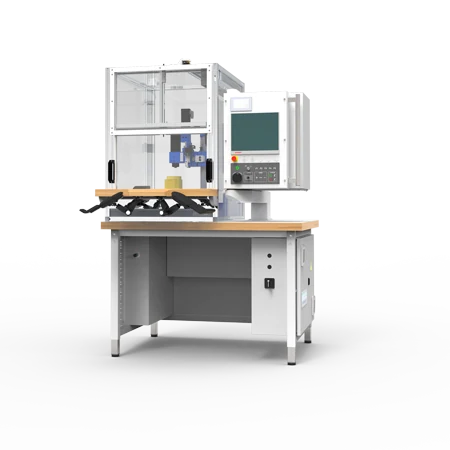
We wrote the manuals and prepared their illustrations, including 3D renderings where needed. For publication, we also developed software that assembles HTML content and CSS styles into PDFs. The tool grew out of the work required.
The deliverables
Manuals and a reusable publishing chain. Other engagements include welding equipment for plumbing and industrial cooling equipment.
Dental, medical and industrial equipment
Restructuring entire documentation collections
Revision, centralisation, structuring and translation beyond individual manuals.
View the work
Dental, medical and industrial equipment
Restructuring entire documentation collections
Revision, centralisation, structuring and translation beyond individual manuals.
View the workThe need
Develop a documentation collection with multiple publications and language versions.
The work
For a dental equipment manufacturer, we handled every document in a restructuring and centralisation project using MadCap Flare. Other engagements took us into medical and biomedical equipment, semiconductors and machine tools, with the documentation constraints of each field.
The deliverables
Restructured content, technical translations, and web or print publications according to the engagement. The work covers the organisation of the collection as well as the writing.
Software and industrial integration
Connecting documentation to machines and business data
Documentation, management software and on-machine viewing, using data from an ERP.
View the work
Software and industrial integration
Connecting documentation to machines and business data
Documentation, management software and on-machine viewing, using data from an ERP.
View the workThe need
Manage a semiconductor equipment manufacturer’s documents and make them accessible on its machines.
The work
In this engagement, we produced the documentation and developed both the software managing it and the application displaying it on the machines. The chain also retrieves data from SAP. Content, management and information available at the point of use had to work together.
The deliverables
A documentation chain covering content, management and on-machine access. In a separate engagement, a search tool was also developed for images linked to FrameMaker books.
3D, graphic design and web
Creating images and materials that explain equipment
3D renderings, animations, short films, technical sheets, graphic design and websites.
View the work
3D, graphic design and web
Creating images and materials that explain equipment
3D renderings, animations, short films, technical sheets, graphic design and websites.
View the work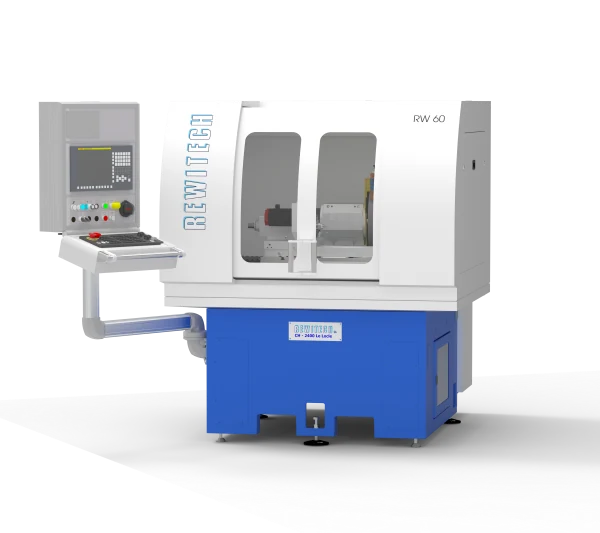
The need
Present equipment, explain how it works, and prepare documentation or sales materials.
The work
Machine renderings also led to animations, short films and product sheets. We produced graphic materials, including flyers in Illustrator, and built websites. Depending on the engagement, the same product knowledge explains how it works or supports its presentation.
The deliverables
Images and materials suited to their purpose: documentation, sales presentations, print or online publication. These projects cover several manufacturers and industrial fields.
IT management
Supporting several law firms over time
IT estates, servers, security, telephony and maintenance as organisations evolve.
View the work
IT management
Supporting several law firms over time
IT estates, servers, security, telephony and maintenance as organisations evolve.
View the workThe need
Maintain law firms’ IT and adapt it to growth or transitions.
The work
We work with several law firms and businesses of different sizes, for audits, takeovers or ongoing support. This covers workstations, servers, access, protection and telephony according to the engagement. Some clients have trusted us since Karbonic began.
The deliverables
An installation changes with the business: new people, different uses, relocation or a move to other tools. Ongoing support also means preparing those transitions while retaining knowledge of what is already in place.
Security and digital investigation
Analysing an incident, restoring systems and monitoring protection
Intrusion analysis, restoration of the IT estate and monitoring of security coverage.
View the work
Security and digital investigation
Analysing an incident, restoring systems and monitoring protection
Intrusion analysis, restoration of the IT estate and monitoring of security coverage.
View the workThe need
Understand an IT incident and restore a usable working environment.
The work
After an intrusion at an organisation, we analysed the incident and restored its IT environment. We then put protection coverage monitoring in place: which machines are present, which are protected and which have stopped reporting their status.
The deliverables
An investigation can go down to an email, its headers and its technical route. The traces have to be compared and their evidence explained without adding a story they do not contain. We show the method here, never the contents of a dossier.
IT estate and server management · Writing and translation · System security
Explore further
Understand the business, then build
Understand the business, then build
Sectors whose requirements Karbonic understands: watchmaking, precision and heavy machine tools, microengineering, semiconductors, medical and biomedical, dental equipment, wire drawing, construction equipment, the press, law firms, industrial subcontracting and printing.
“I want someone who understands what my software needs to do.”
A quotation, a stock movement or an accounting calculation depends on precise rules. Screens, data exchanges and checks are defined around those rules.
Software work predates today’s tools by many years. Training in business computing, completed in 1997, was followed in 1999 by financial consolidation in an ERP, then the main functions of a construction ERP and several developments alongside accountants. Business rules have always been part of understanding the code.
A rule understood in a meeting still has to work in the application, with existing data and real users. We follow that passage through integration and deployment.
- Understand operations, exceptions and authoritative data.
- Connect the application to existing equipment, access controls and tools.
- Plan checks, data migration and maintenance.
Getting started
A real operation, an example of the expected result and the limitations you face are enough for an initial discussion.
Custom software development FR · Work organisation and budget
Software for specific needs
Website security, device monitoring and document publishing.
Software for specific needs
Website security, device monitoring and document publishing.
“I am looking for an established tool for a specific need.”
K-Shield, NetWatch and HTML Editor are software tools developed by Karbonic. Their provision and the support required are defined according to your situation.
K-Shield
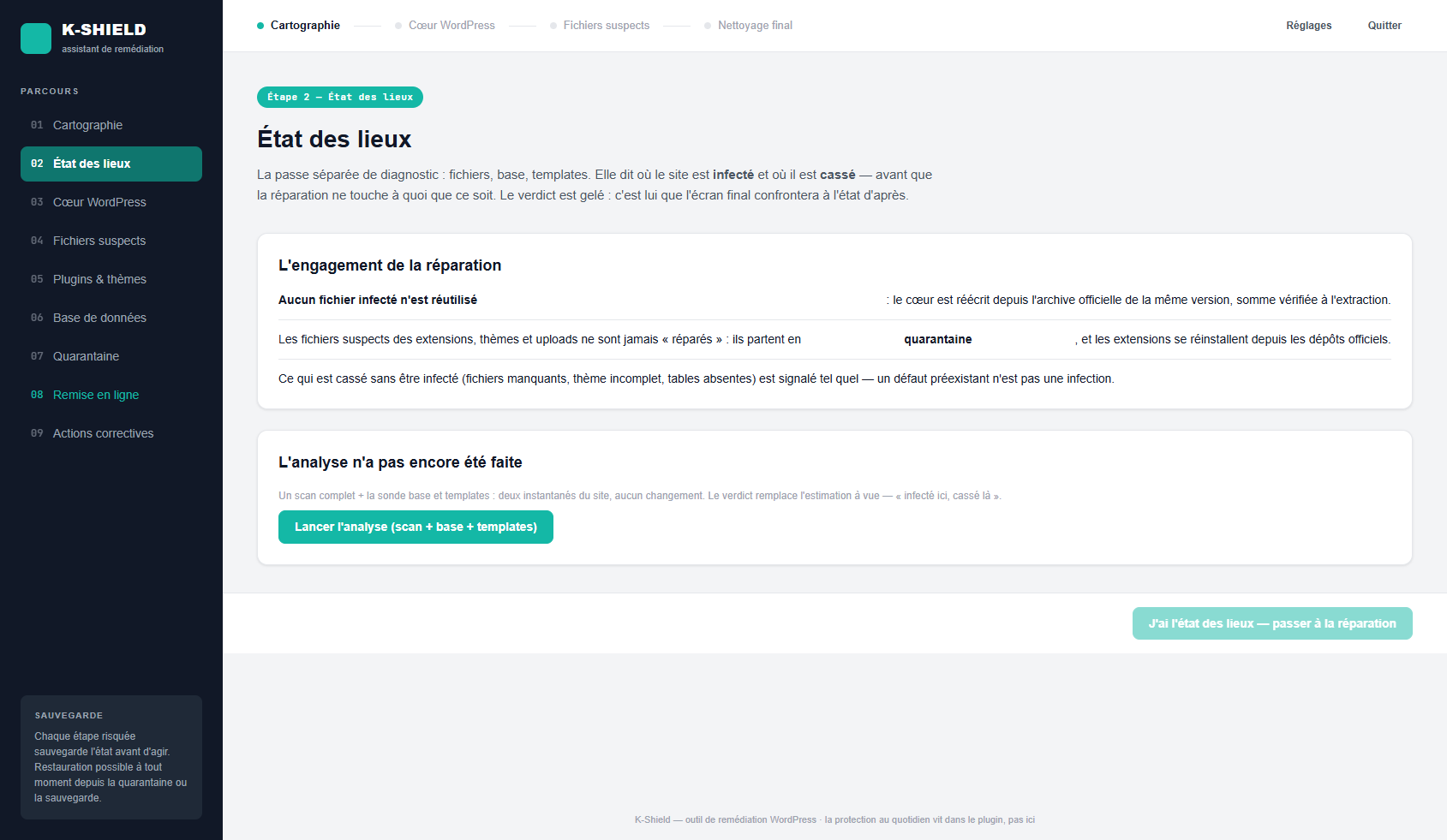
My WordPress website has been compromised: I want to recover and protect it.
Functions and integration
A compromised website needs to be examined, repaired and monitored. K-Shield combines reinstalling a clean core with signature-based and heuristic detection of backdoors.
- Detected items are named in the report; reversible quarantine allows affected files to be handled.
- Database cleaning and hardening are part of the recovery functions.
- Depending on the configuration, a web application firewall and behavioural analysis complement monitoring.
Recovery is carried out while preserving your control over access. Findings and the limits of the analysis remain identifiable.
Getting started
The website address and the symptoms you have observed, without sending a password in your first message.

NetWatch
I want to see network devices and gaps in endpoint protection.
Functions and integration
Having protection software installed does not describe the state of an entire IT estate. Deployed at customer sites, NetWatch brings together the local network inventory and endpoint protection information.
- Equipment and protection coverage are inventoried.
- Gaps are made visible in reports and alerts.
- Commands can be executed from a workstation on the network, within the agreed scope of intervention.
Getting started
An inventory, even if incomplete, and the management and security tools already in use.
HTML Editor
I want to write once, reuse content and publish in several formats.
Functions and integration
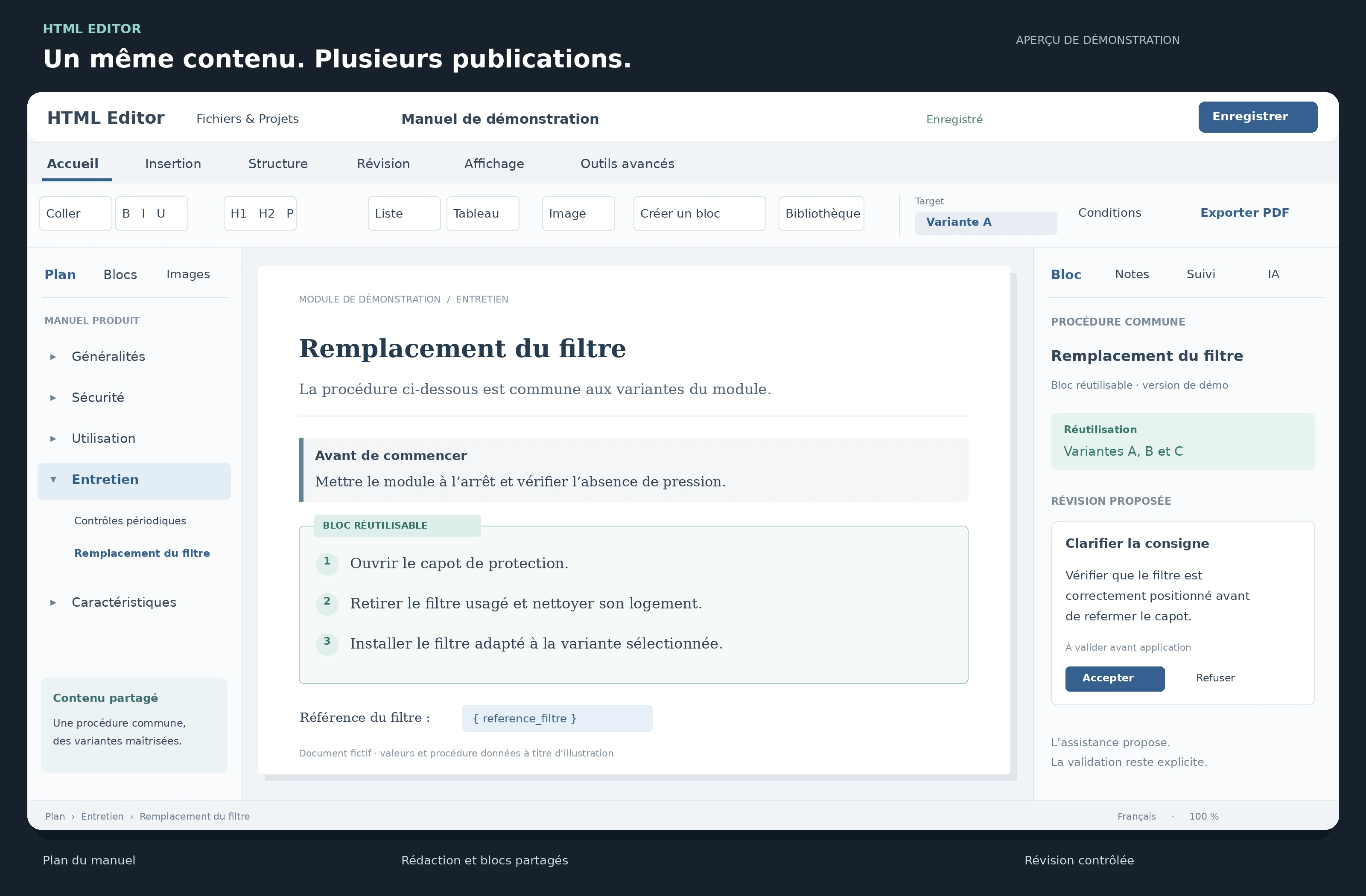
HTML Editor organises HTML/CSS content into sections and reusable blocks. Conditions, variables and output profiles support document variants.
- Content is organised for reuse and maintenance.
- Document exchanges and outputs are checked against representative examples.
- AI-driven operation is part of the authoring and review process.
Getting started
A representative document, its variants and the formats in which it needs to be published.
Development and integration
Applications connected to business operations and documents.
Development and integration
Applications connected to business operations and documents.
“My requirement does not fit a ready-made application.”
Some of our developments sit within a wider engagement: an interface, a business function or a missing tool between applications. Its role in the client’s work determines the scope.
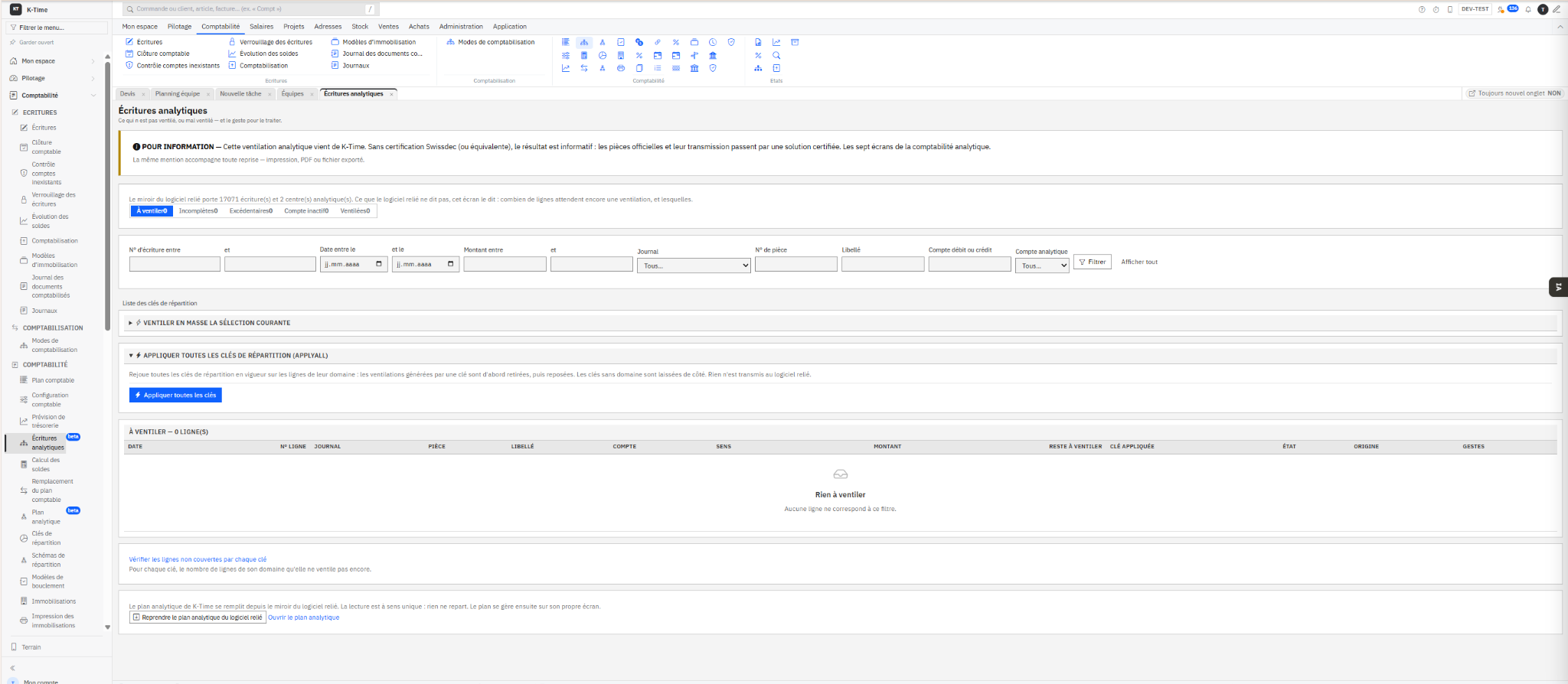
K-Time
I want to connect business operations and the data my organisation uses.
Functions and integration
Development covers quotations, invoices, purchasing, stock, time, accounting and payroll. A bridge to an existing desktop application prepares a gradual transition towards its replacement.
We developed and used an interface to existing desktop business software for clients. It brings the existing system into a wider project, with field mappings and checks. A transition does not require replacing everything on the same day.
- The relationships between operations and their accounting consequences are taken into account.
- Data migration and exchanges with the existing tool are part of development.
Getting started
A business workflow, from the initial document to the accounting result, and the data that must be retained.
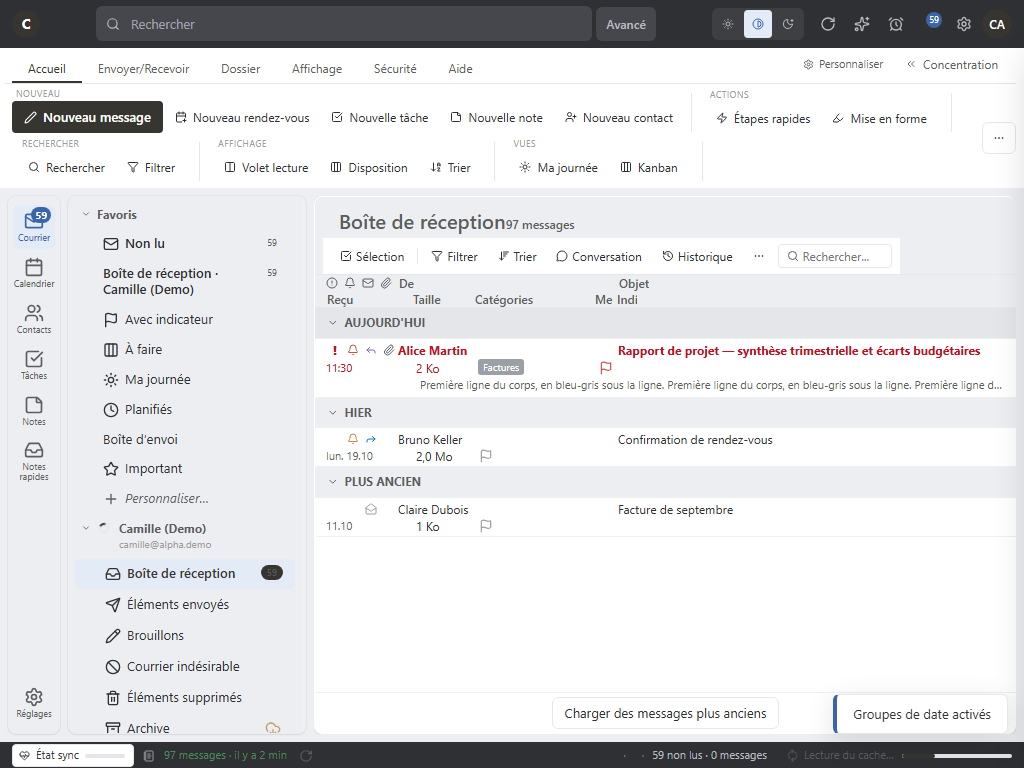
ClearMyMails (CMM)
I want to find messages, calendars and contacts in one environment.
Functions and integration
A desktop client brings together several email and calendar connectors. Heavy processing is organised separately from the interface.
- Connections to mailboxes and calendars are integrated into one tool.
- Background processing and synchronisation are taken into account in the architecture.
Getting started
The services to connect and the operations that currently require switching between tools.

Document summaries
I want summaries whose information remains linked to the source documents.
Functions and integration
Our synthesis engine links facts to their source documents and applies a grid of checks. Items that do not pass are excluded from the summary and remain flagged for examination. Readers need to be able to return to the basis for what was retained.
- The document and passage used remain identifiable.
- Accepted facts and items requiring verification are kept separate.
- The correspondence between a statement and its source must be checked: a reference alone does not establish it.
Getting started
An anonymised case file, the questions to answer and the documents that should serve as references.

Document management
I want to find documents and organise how they are processed.
Functions and integration
A document management system is being developed around one principle: folders and files remain readable without the application.
- Text recognition and automatic classification support document processing.
- Approval workflows organise work around the folders.
- Access to files is retained independently of the management interface.
Getting started
A typical folder, its current organisation and the processing or approval stages.
Discuss custom software FR · Automate tasks FR · Control data and its processing
Check what is built
Data migration, diagnostics and source checks follow explicit principles.
Check what is built
Data migration, diagnostics and source checks follow explicit principles.
“I want to know how errors are identified and results checked.”
To create an application or take over a prototype, including an AI-generated one, we start with its operations. What data does it receive? Which rules does it apply? What happens when information is missing? That is where development work can be examined.
The following examples illustrate engineering principles. They are generic and simplified, not extracts from Karbonic products.
Migrate data with explicit checks
A transfer begins with the mapping between fields. We group processing where appropriate, then compare rows, keys, relationships and values. Totals that matter to the business are part of the check, beyond successful query execution.
SQL example for MariaDB: the source remains unchanged during the check, the target is empty, field types match, and ref is a unique, non-null key. Data is transferred in one query, then the same fields are compared on both sides.
-- Same field types; stable source, empty target, unique non-null ref.
INSERT INTO cible (ref, libelle, montant)
SELECT ref, libelle, montant FROM source_normalisee;

-- Compare all keys and row hashes, including missing or extra keys.
SELECT ref, MD5(JSON_ARRAY(ref, libelle, montant)) AS empreinte
FROM source_normalisee ORDER BY ref;
SELECT ref, MD5(JSON_ARRAY(ref, libelle, montant)) AS empreinte
FROM cible ORDER BY ref;
The two result sets must then be compared by key: different checksums, missing keys and extra keys. Row counts are checked too. A checksum per row avoids relying on the maximum length of a combined string; it is not proof of authenticity.
The fingerprint supplements those comparisons; it does not tell us whether a transformation rule is correct. We also check the business result and prepare the switchover and rollback conditions before changing live data.
Measure a stage to locate a slowdown
When a process slows down, its log can identify the step and its duration instead of leaving the delay to guesswork. Steps are named in advance; document contents do not need copying into the log.
import logging
from time import perf_counter

def run_step(name, operation):
    start = perf_counter()
    try:
        return operation()
    except Exception:
        logging.error("step=%s status=failed", name)
        raise
    finally:
        # Record timing without logging the processed content.
        logging.info("step=%s elapsed_ms=%.1f",
                     name, (perf_counter() - start) * 1000)
Measurement provides a starting point for investigation. It helps distinguish slow processing from a network wait or an error at a specific stage.
Separate a checked fact from an item requiring review
def select_supported(facts, sources):
    accepted, pending = [], []
    for fact in facts:
        source = sources.get(fact.get("source_ref"))
        # A reference alone does not validate a claim.
        checked = fact.get("support_checked") is True
        if source is not None and checked:
            accepted.append(fact)
        else:
            pending.append(fact)
    return accepted, pending
This filter receives an upstream check. It does not read the document or verify its meaning. Concordance must be checked elsewhere, and facts still awaiting review must remain visible. The code illustrates that separation of tasks.
These methods use languages suited to the project, including C, C++, Delphi, Java, JavaScript and Python. Systems integration and digital forensics complement this practice: understanding dependencies, locating traces and explaining what happened.
A practical application: updating this website
A practical application: updating this website
“I want to request a change without editing the files myself.”
The site you are reading is another example. A request made in conversation goes through an interface for reading, editing and publication. Versions are retained so that the previous state can be recovered.
The assistant is connected to the files and the operations the control interface permits. We check the result before and after publication. The history lets us revisit a change when its result does not fit.
Data choices explained
Data choices explained
“I want to know where my information is processed.”
Some processing can stay on your equipment; other services can be hosted in Switzerland. We examine access, dependencies and data recovery before choosing that arrangement. A server’s stated location alone does not describe the whole chain.
Let's discuss what you want to improve
Show us an operation that stalls or a tool that no longer fits your work. We can look at what exists, what is worth keeping and the work needed for the next step.